2,4- Dinitrophenylhydrazine DNPH For Synthesis About
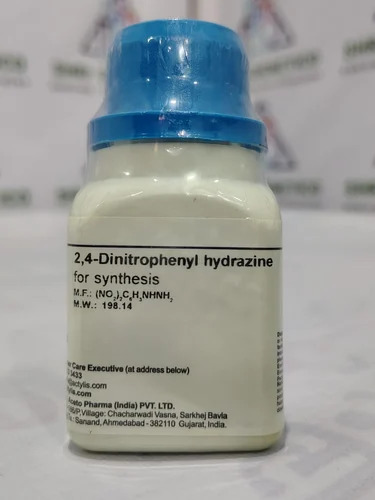
Pick Yours from the latest range of high-purity 2,4-Dinitrophenylhydrazine DNPH for Synthesis, a valiant option for analytical applications at an unbeatable price. This uncommon, odorless crystalline powder, with a perfect yellow to orange hue, excels in the detection of carbonyl compounds. Supplied in a 25g pack and manufactured in India, DNPH boasts a three-year shelf life and trusted stability under recommended storage. Handle with care-use gloves and goggles. Strictly for synthesis only, this laboratory-grade reagent ensures safety and reliability in every application.
Exceptional Material and Versatile Use
2,4-Dinitrophenylhydrazine (DNPH) for Synthesis stands out with its perfect blend of laboratory-grade purity and uncommon stability. Specifically designed for the detection of carbonyl compounds, DNPH serves as a valiant analytical reagent across research and industrial settings. Its crystalline powder form guarantees easy handling while its neutral pH and slight water solubility enhance versatility. Odorless and stable, it's the ideal solution for precise laboratory analyses and reliable synthesis.
Delivery, Payment, and Export Markets
Our prompt delivery time ensures your DNPH reaches you safely via secure freight within days of order confirmation. Flexible payment terms simplify your outlay-choose from various exchange options to suit your procurement protocol. We proudly export DNPH to main global markets, maintaining strict standards on packaging and documentation. International researchers and laboratories can rely on our efficient service for their analytical reagent needs.
FAQ's of 2,4- Dinitrophenylhydrazine DNPH For Synthesis:
Q: How should 2,4-Dinitrophenylhydrazine DNPH be stored for maximum stability?
A: 2,4-Dinitrophenylhydrazine DNPH should be stored in a cool, dry, well-ventilated area away from light due to its sensitivity. This ensures the product remains stable for up to three years.
Q: What is the primary usage of DNPH for synthesis in laboratory settings?
A: DNPH for synthesis is primarily used as an analytical reagent for the detection of carbonyl compounds in various samples, making it essential for qualitative and quantitative chemical analysis.
Q: When is it necessary to wear protective equipment while handling DNPH?
A: It is always necessary to wear gloves and goggles when handling DNPH, as it is classified as an irritant and toxic substance. Proper safety practices reduce risk and support safe laboratory operations.
Q: Where does DNPH for synthesis see the most benefit in research applications?
A: DNPH is highly beneficial in research fields including organic synthesis, analytical chemistry, and environmental monitoring, where precise carbonyl compound detection is critical.
Q: What steps are involved in the process of using DNPH for detecting carbonyl compounds?
A: Typically, a sample is treated with DNPH solution, leading to the formation of a colored precipitate if carbonyl groups are present. This allows for qualitative or quantitative assessment.
Q: How does DNPH's purity and laboratory grade improve experimental results?
A: DNPH's laboratory-grade purity ensures high specificity and accuracy in analytical procedures, minimizing interference and enhancing the reliability of experimental outcomes.




 Send Inquiry
 Send Inquiry

